
About IMPRESS
While physicians are often confronted with immunoglobulin A (IgA) deficiency in children with recurrent infections, the clinical relevance of this finding is unclear. Large scale studies examining the significance of IgA deficiency in children are hampered by differences in techniques for measuring IgA and the physiological increase of IgA with age.
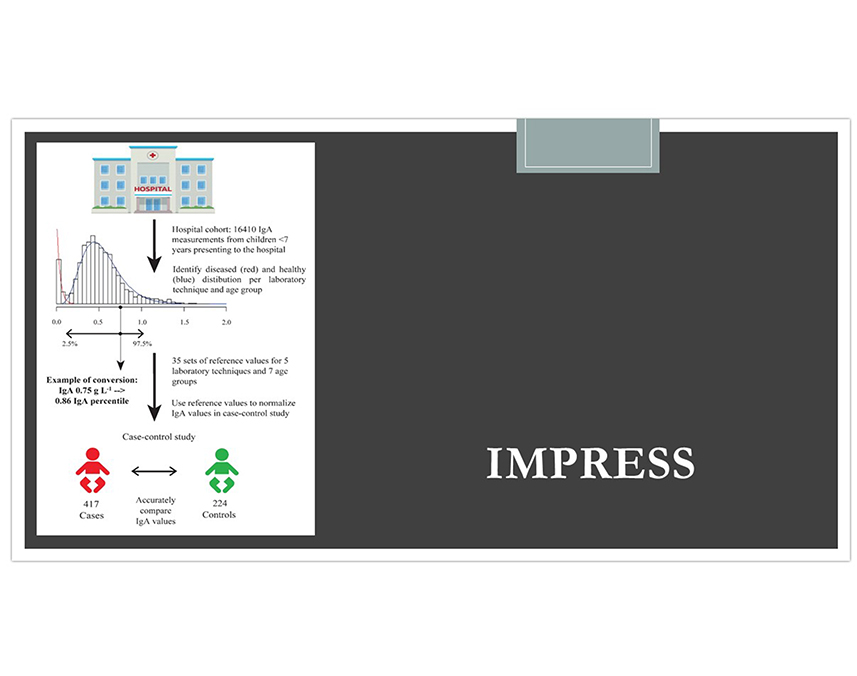
Both result in a variety of reference values used for diagnosing IgA deficiency. We developed a new laboratory-independent method to accurately compare IgA measurements in children of varying ages.
We applied this method to a multicentre case–control study of children under the age of seven suffering from recurrent respiratory tract infections (rRTI, cases) and children who had IgA measured as part of coeliac disease screening (controls).
This way, we showed that IgA deficiency was more prevalent in children with rRTI compared with controls. This implicates that IgA deficiency may be a clinically relevant condition, even in young children.
The IMPRESS team
Principal investigator and primary affiliation
Dr. Lilly Verhagen (Radboudumc, Nijmegen, The Netherlands)
Wilhelmina Children’s Hospital, UMC Utrecht, Utrecht
Prof. Debby Bogaert
Prof. Elisabeth Sanders
Dr. Mischa Koenen
Dr. Marianne Boes
Dr. Joris van Montfrans
Drs. Fabiënne Wopereis
Drs. Udo Roorda
St. Antonius Hospital, Nieuwegein, The Netherlands
Dr. Madeleen Bosma
Dr. Anja Roos
Dr. Jojanneke Heidema
Dr. Walter Balemans
Dr. Thijs van Holten
Department of Research & Development, GD Animal Health, Deventer, The Netherlands
Dr. Erhard van der Vries
Related publications
- MH Koenen, M Bosma, UA Roorda, FMY Wopereis, A Roos, E van der Vries, D Bogaert, EAM Sanders, M Boes, J Heidema, JM van Montfrans, WAF Balemans, TC van Holten, LM Verhagen. A novel method to standardize IgA measurements shows an increased prevalence of IgA deficiency in young children with recurrent respiratory tract infections. Clin Transl Immunology 2021;10(11):e1344.
Project funding